

The destination
A legacy of conservation & heritage
Among India's largest and most celebrated national parks — and one of very few places on earth where tigers move freely amongst standing historical monuments.
0 sq km
Reserve area
Tiger reserve total
0
Safari zones
Core zones 1 – 10
0+
Bengal tigers
Latest reserve estimate
0+
Mammal species
Leopard to sloth bear
0+
Bird species
Resident & migratory
0+
Plant species
Dhok-dominated forest
Hunting ground, then sanctuary
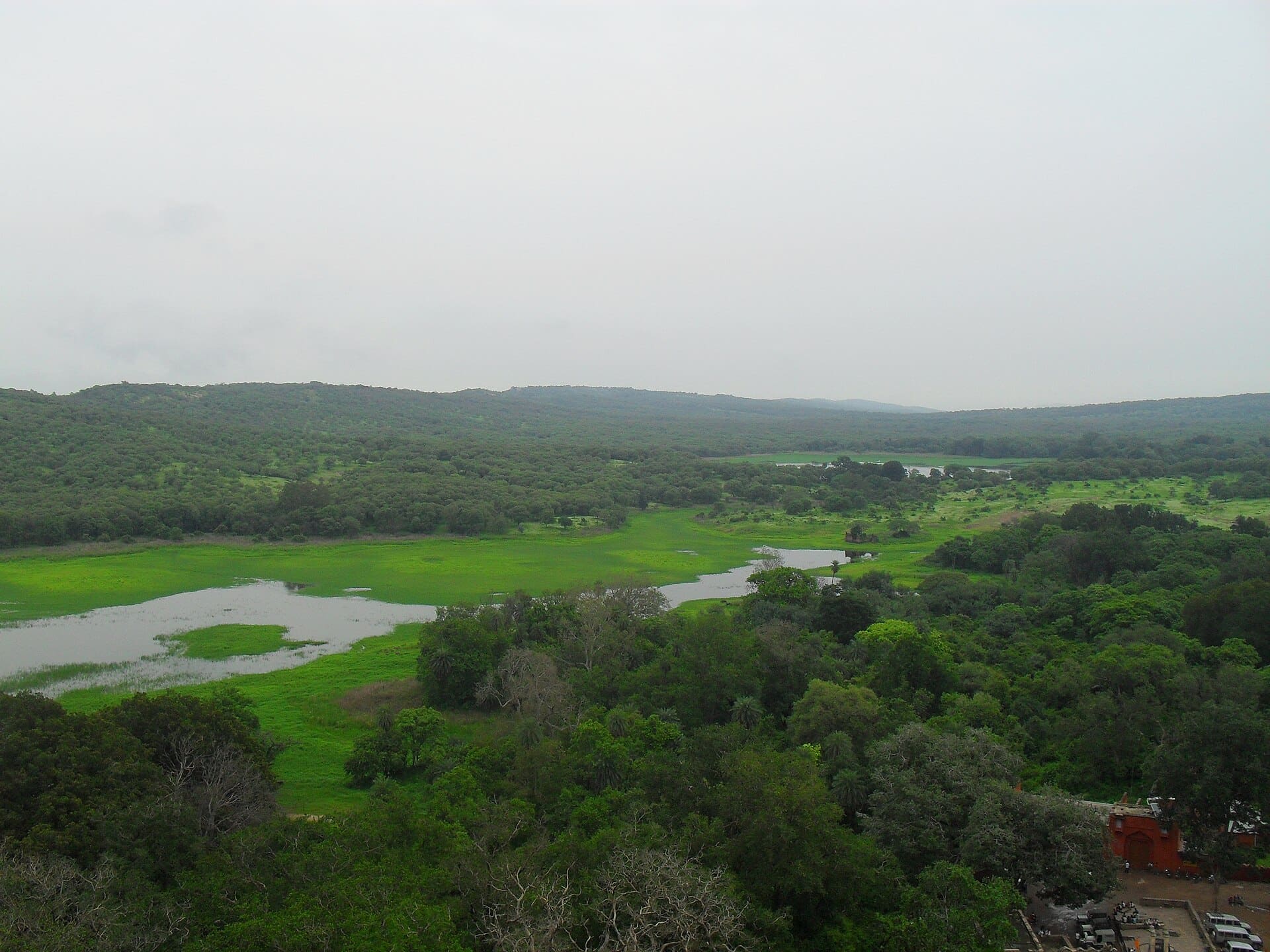
Ranthambore National Park, spread across 1,334 sq km in the Sawai Madhopur district of Rajasthan, is among India's largest and most celebrated national parks.
Originally the hunting grounds of the Maharajas of Jaipur, it was declared a wildlife sanctuary in 1955 and upgraded to a national park in 1980. The park forms part of India's Project Tiger initiative and is recognised globally for its tiger conservation record.
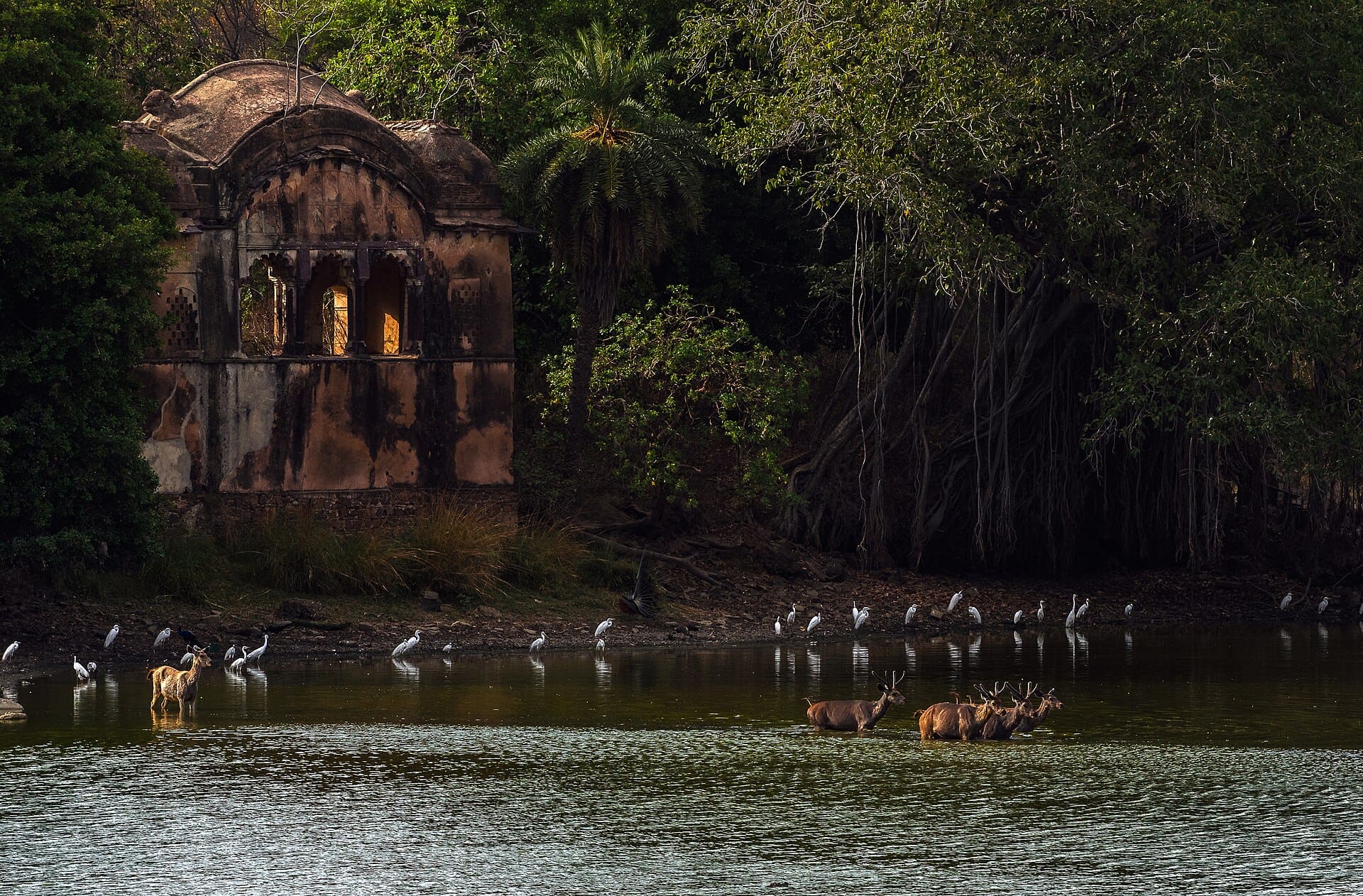
Its landscape is what sets it apart — a dramatic blend of dry deciduous forest, ancient ruins and shimmering lakes. It is one of very few places on earth where tigers move freely amongst standing historical monuments.
- 10th c.
The fort is built
Ranthambore Fort rises above the forest, contested for centuries by Rajputs, Khiljis and Mughals.
- Pre-1947
Royal hunting reserve
The forest serves as the private shikar grounds of the Maharajas of Jaipur.
- 1955
Declared a sanctuary
Protected status arrives as the Sawai Madhopur Game Sanctuary.
- 1973
Project Tiger
Named one of India's original nine Project Tiger reserves.
- 1980
National park status
Upgraded to a full national park, with core zones closed to habitation.
- 2013
UNESCO inscription
The fort is inscribed as part of the Hill Forts of Rajasthan.
What actually lives here
Forty-odd mammal species, over 320 birds, and a dhok-dominated dry deciduous forest that turns the whole park gold by April.
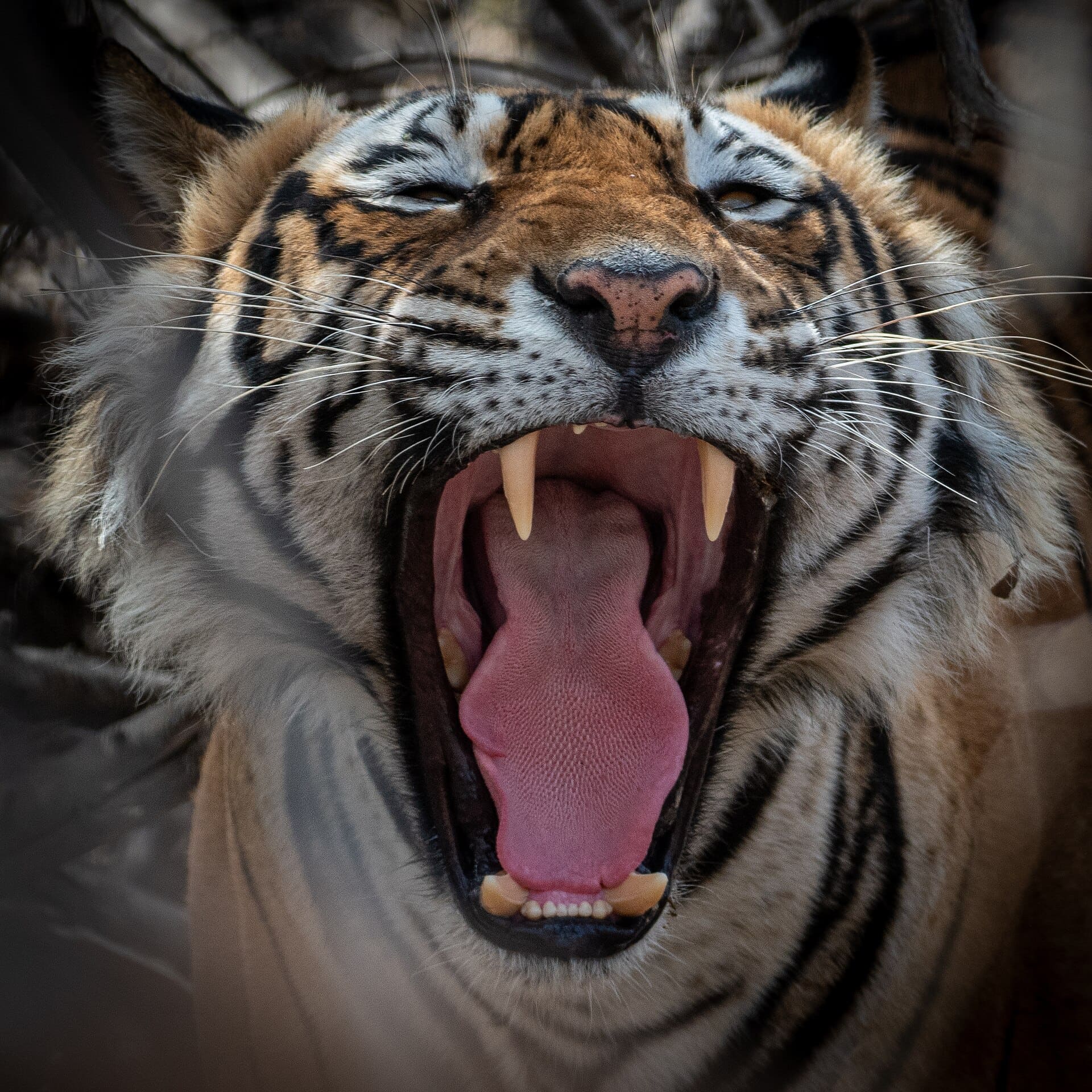
Royal Bengal tiger
Panthera tigris tigris
The reason most people come. Ranthambore's tigers are unusually habituated to vehicles, which makes daylight sightings more plausible here than in most reserves.
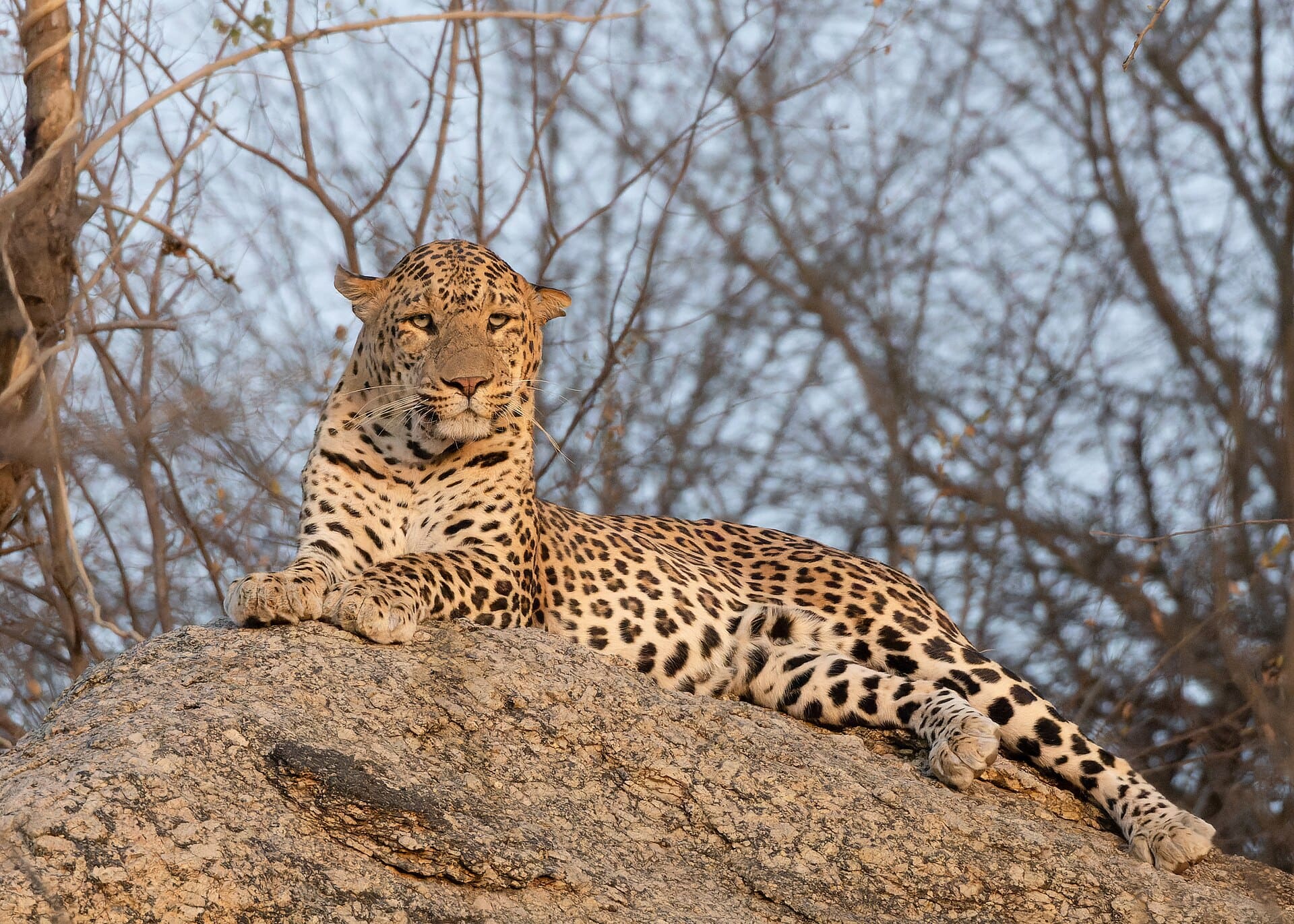
Indian leopard
Panthera pardus fusca
Present throughout, but concentrated at the periphery — Kachida especially — where they avoid the highest tiger densities.
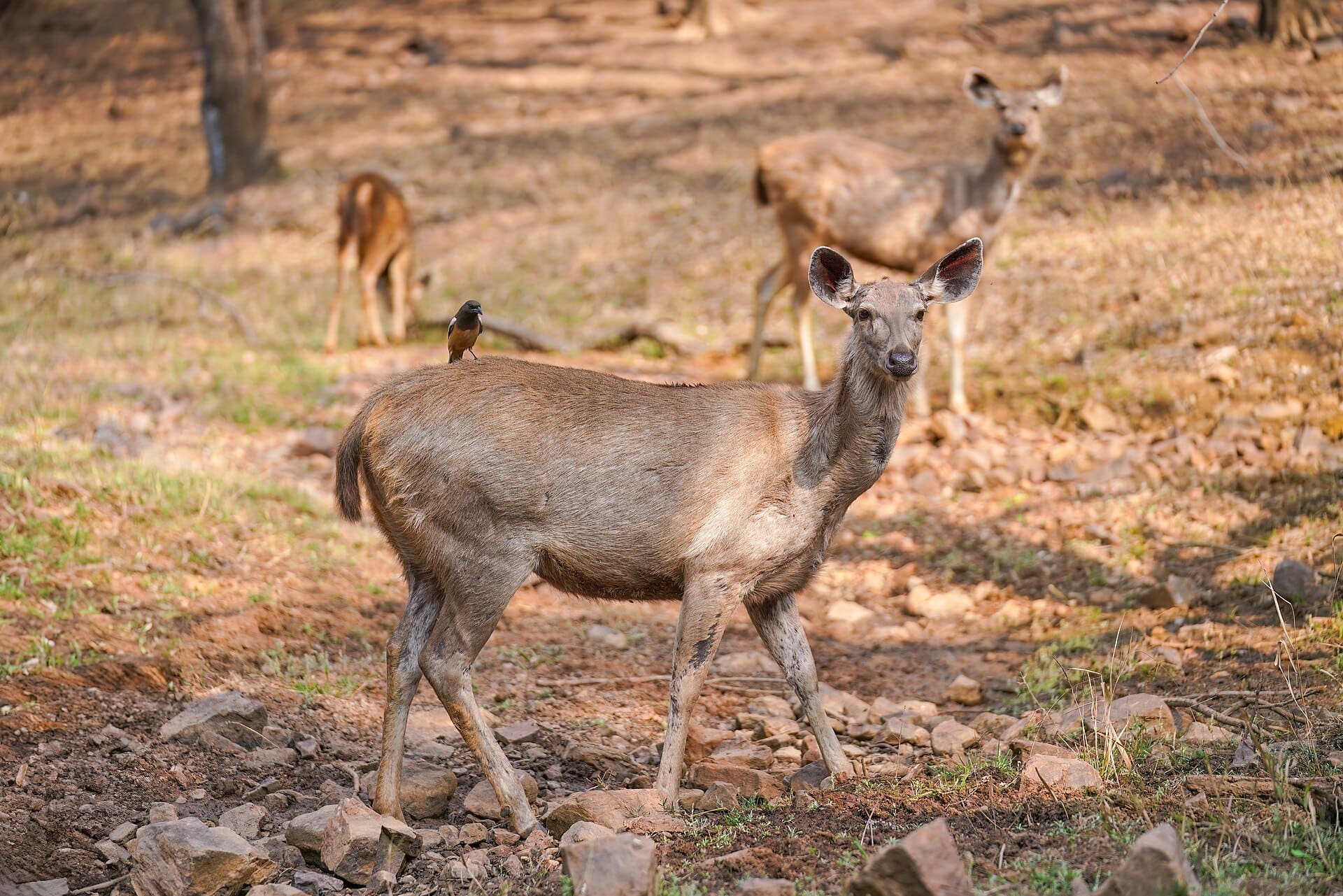
Sambar deer
Rusa unicolor
India's largest deer and the tiger's principal prey. Their alarm call is the single most useful sound on a safari drive.
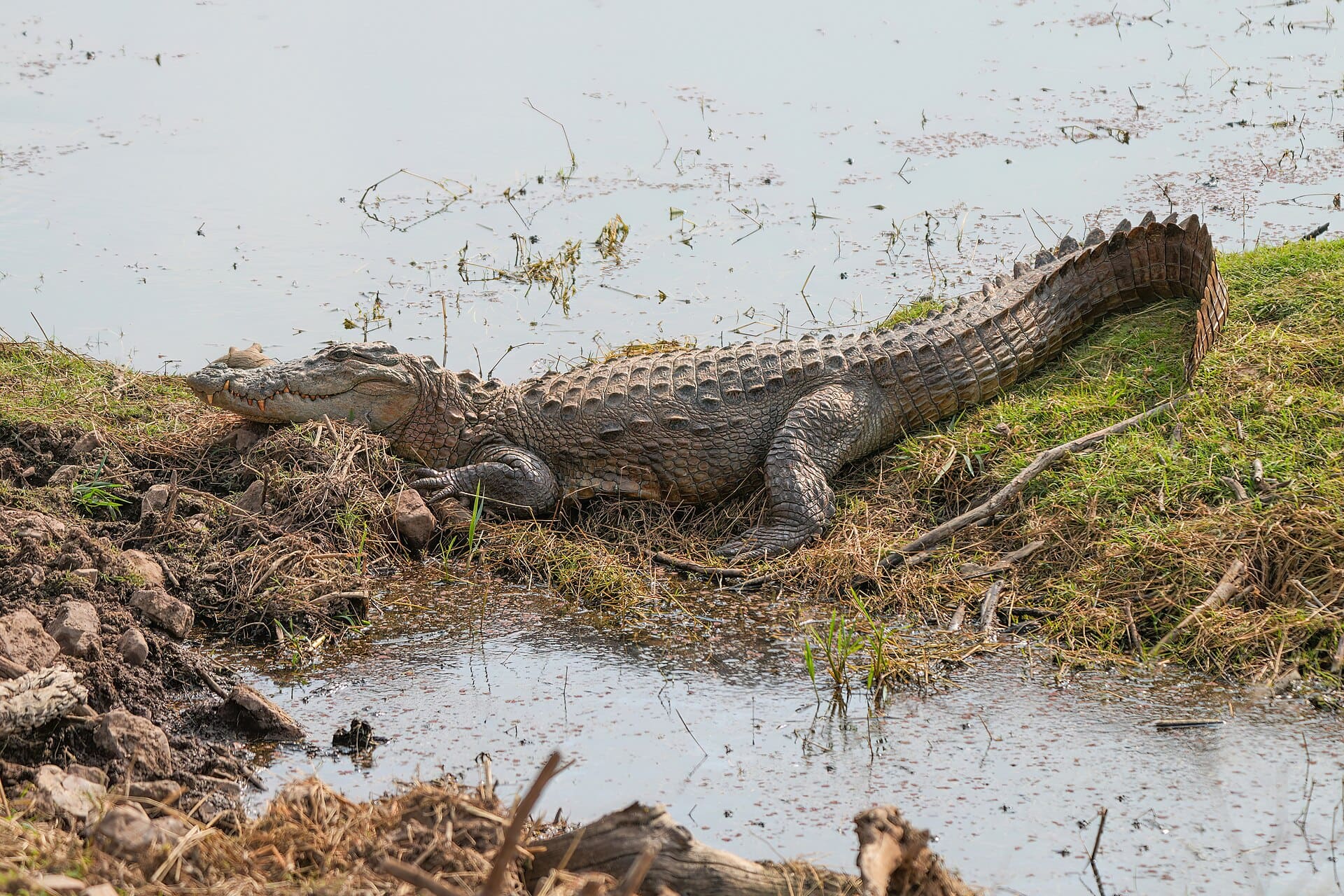
Mugger crocodile
Crocodylus palustris
Holds the banks of Padam and Rajbagh. Frequently seen basking within metres of grazing sambar.
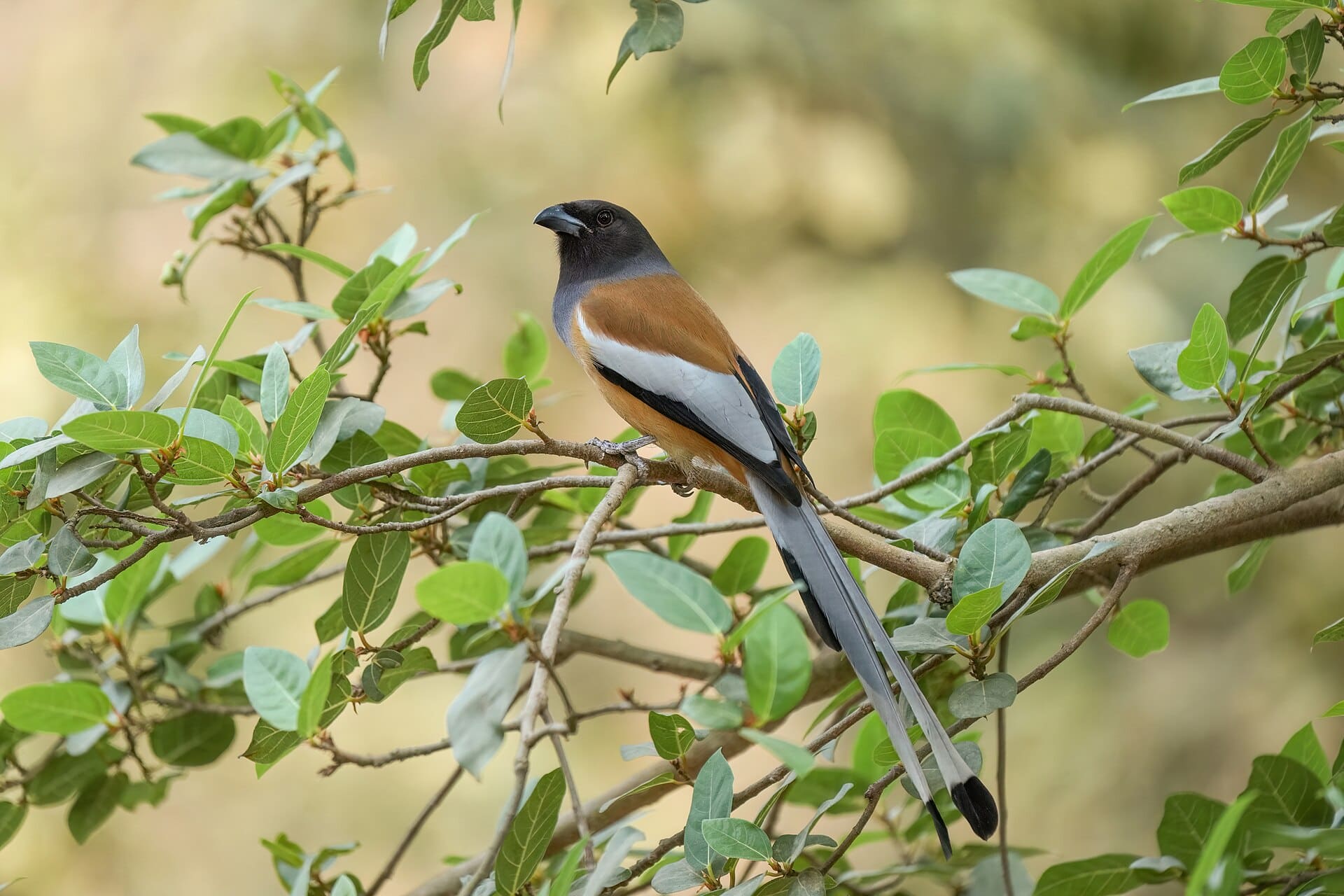
Rufous treepie
Dendrocitta vagabunda
Ranthambore's signature bird — bold enough to land on vehicles, and locally nicknamed the tiger's toothpick.
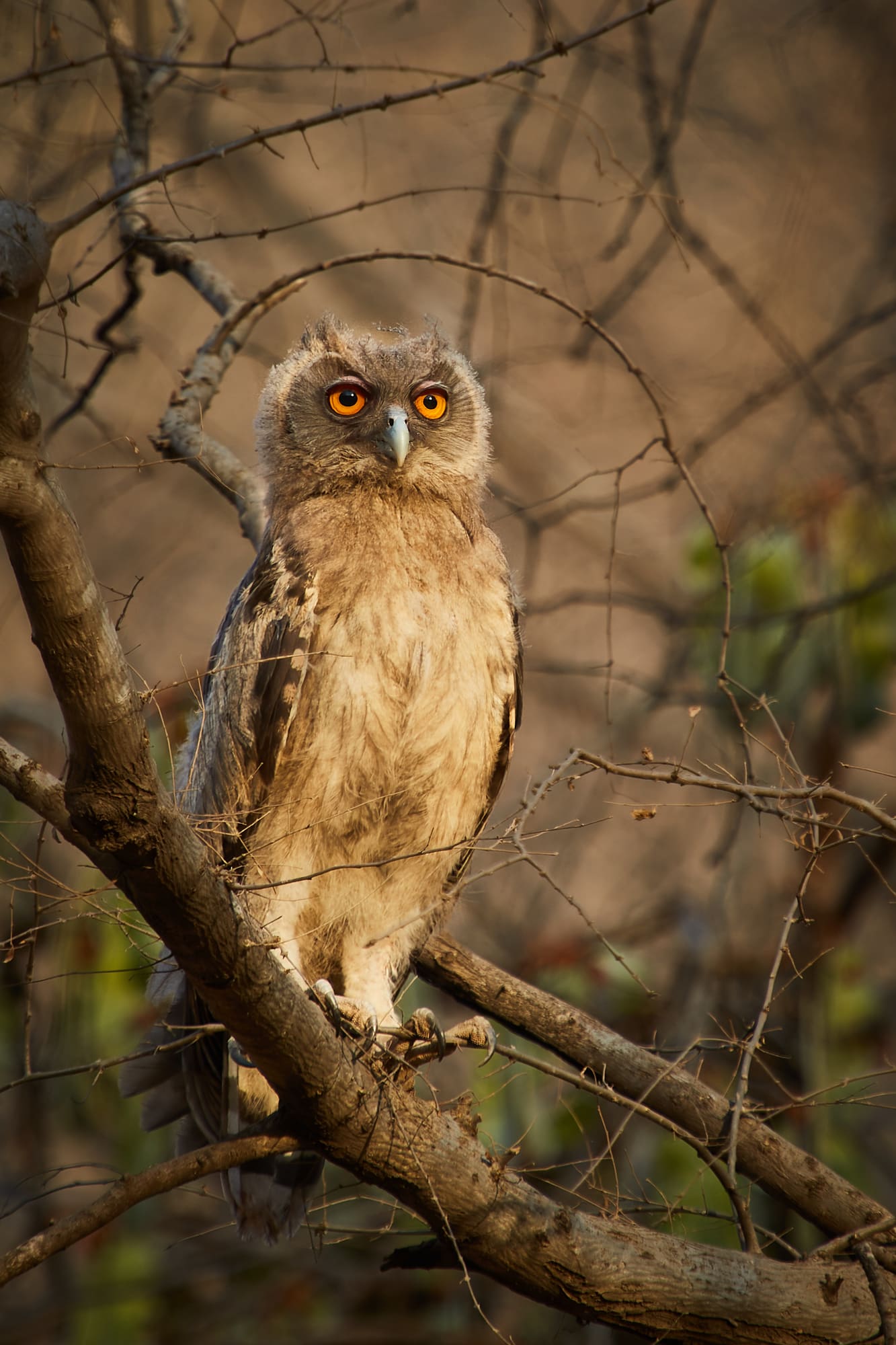
Dusky eagle-owl
Ketupa coromanda
One of over 320 recorded bird species. The park is a serious birding destination in its own right, quite apart from the tigers.
Ten zones, ten different parks
Zone allocation is made by the Forest Department through a computerised system — never by an operator. Anyone guaranteeing you a specific zone is guessing.
Hilly, dense
Borders the buffer; good for tigress-with-cub movement.
Lakes & hills
Consistently among the highest sighting rates in the park.
Lakes & ruins
Padam Talao, Rajbagh ruins and Jogi Mahal. The classic Ranthambore.
Valleys & lakes
Malik Talao and Lakarda. Historically strong for large males.
Open plateau
Kachida edge and Anantpura. Open country, long sightlines.
Open grassland
Kundal area. Excellent for raptors and open-country species.
Rugged, sparse
Chidikho. Quieter drives; rewards patience.
Rolling, wooded
Balas and Neemli Dang. Good all-round wildlife density.
River valley
Kuwalji, along the Banas. Sloth bear and aquatic birdlife.
Open, undulating
Aantri. Known for tigress territories at the reserve edge.
A note on zones. Zones 2, 3 and 4 hold the lakes, and the lakes hold the prey — so they carry the strongest historical sighting records. But every zone in Ranthambore has resident tigers, and a quiet drive in zone 3 is far more common than a spectacular one in zone 7. Book the reserve, not the zone.
Season by season, honestly
There is no single best month — only trade-offs between comfort, light and the odds of a sighting.
The park reopens, the forest is still green and the light is soft. Comfortable temperatures, lower sighting odds than peak season — the vegetation is thick.
Cold mornings, superb light, and the best all-round conditions for photography and birding. Migratory birds are in. Book well ahead.
The forest dries out and the undergrowth thins. Animals begin to concentrate around water. Sighting probability climbs sharply.
Genuinely hot — 40°C and above — but the highest sighting probability of the year, as everything comes to water. For serious wildlife watchers.
Core zones close, typically 1 July to 30 September. Selected buffer zones may remain open.